Did You Ever Wonder How Child Resistant Package Testing Methods Were Developed?
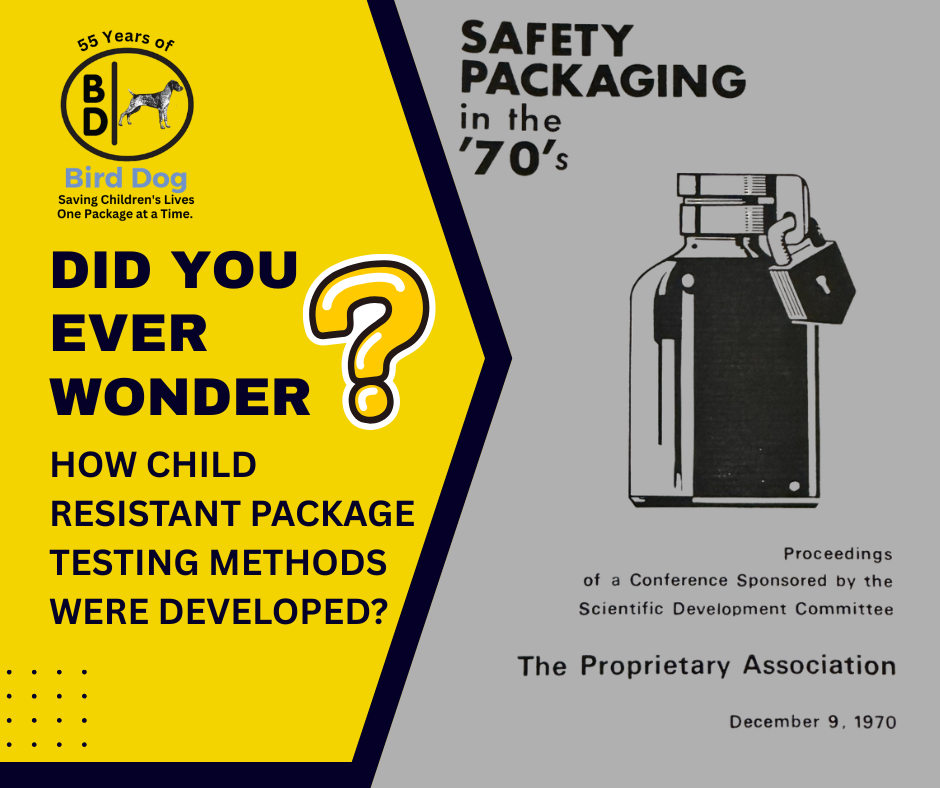
Bird Dog Marketing Group's founder, Gene Miller, was there at the beginning and we still have the documents as part of our history.
We always get asked why certain ages for the child and adult tests. We also get asked why more women than men for the adult test.
This was well thought out!
Understanding the Origins of the PPPA and the Science Behind 16 CFR 1700.20 Testing
In today's regulatory landscape, child safety packaging is something we often take for granted, but its development was driven by urgent public health needs and careful scientific study.
The Birth of the Poison Prevention Packaging Act (PPPA)
The Poison Prevention Packaging Act (PPPA), enacted in 1970, emerged in response to a sharp rise in accidental poisonings among young children in the United States. At the time, common household substances, ranging from medications to cleaning products, were easily accessible, and ingestion incidents were alarmingly frequent.
Lawmakers, healthcare professionals, and safety advocates recognized that education alone was not enough. A passive, engineering-based solution was needed, one that would reduce risk without relying solely on behavior. The result was a mandate for "special packaging," designed to be significantly difficult for children under five years old to open, yet not difficult for average adults to use properly.
Defining "Child-Resistant": The Role of 16 CFR 1700.20
To implement the PPPA effectively, regulators needed a standardized way to evaluate packaging performance. This led to the development of the testing protocol outlined in 16 CFR 1700.20.
Rather than relying on theoretical design standards, the regulation established a performance-based testing method. This means packaging is judged based on how real users, children and adults, interact with it under controlled conditions.
How the Testing Method Was Determined
The methodology in 16 CFR 1700.20 was built on several key principles:
- Realistic Simulation of Use Testing needed to reflect actual human behavior. Researchers studied how children explore objects and how adults open packaging in everyday scenarios.
- Statistical Reliability Large sample sizes and repeatable protocols were introduced to ensure results were statistically meaningful and reproducible.
- Balanced Safety and Accessibility The goal was not to make packaging impossible to open, but to create a measurable delay or barrier for children while maintaining usability for adults.
Why Ages 42-52 Months for Children?
The selected child test group, ages 42 to 51 months (approximately 3.5 to 4.25 years old), was not arbitrary. This age range represents a critical developmental window:
- Children have sufficient motor skills and curiosity to attempt to open containers.
- They lack the cognitive reasoning and strength of older children.
- Data showed this group was at particularly considerable risk for accidental poisoning incidents.
By testing children in this range, regulators ensured that packaging would be robust against the most capable segment of the at-risk population.
Adult Test Panel: Ages 50-70
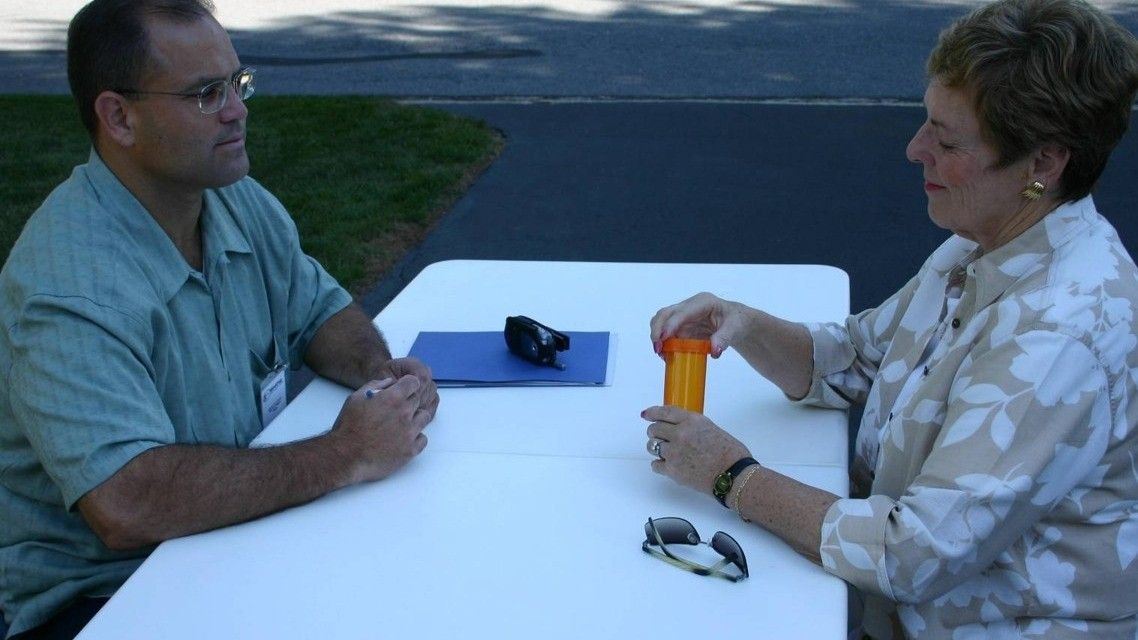
Equally important was ensuring that adults could still access the contents when needed. The adult test group was defined as individuals aged 50 to 70 years old, with at least 70% being female.
This demographic was chosen based on several considerations:
- Older adults may experience reduced grip strength, dexterity, or vision.
- Women were historically more likely to be primary caregivers and frequent users of household products and medications.
- Designing for this group ensures accessibility for a broad population, including those with mild physical limitations.
The Testing Process in Practice
The protocol involves sequential testing:
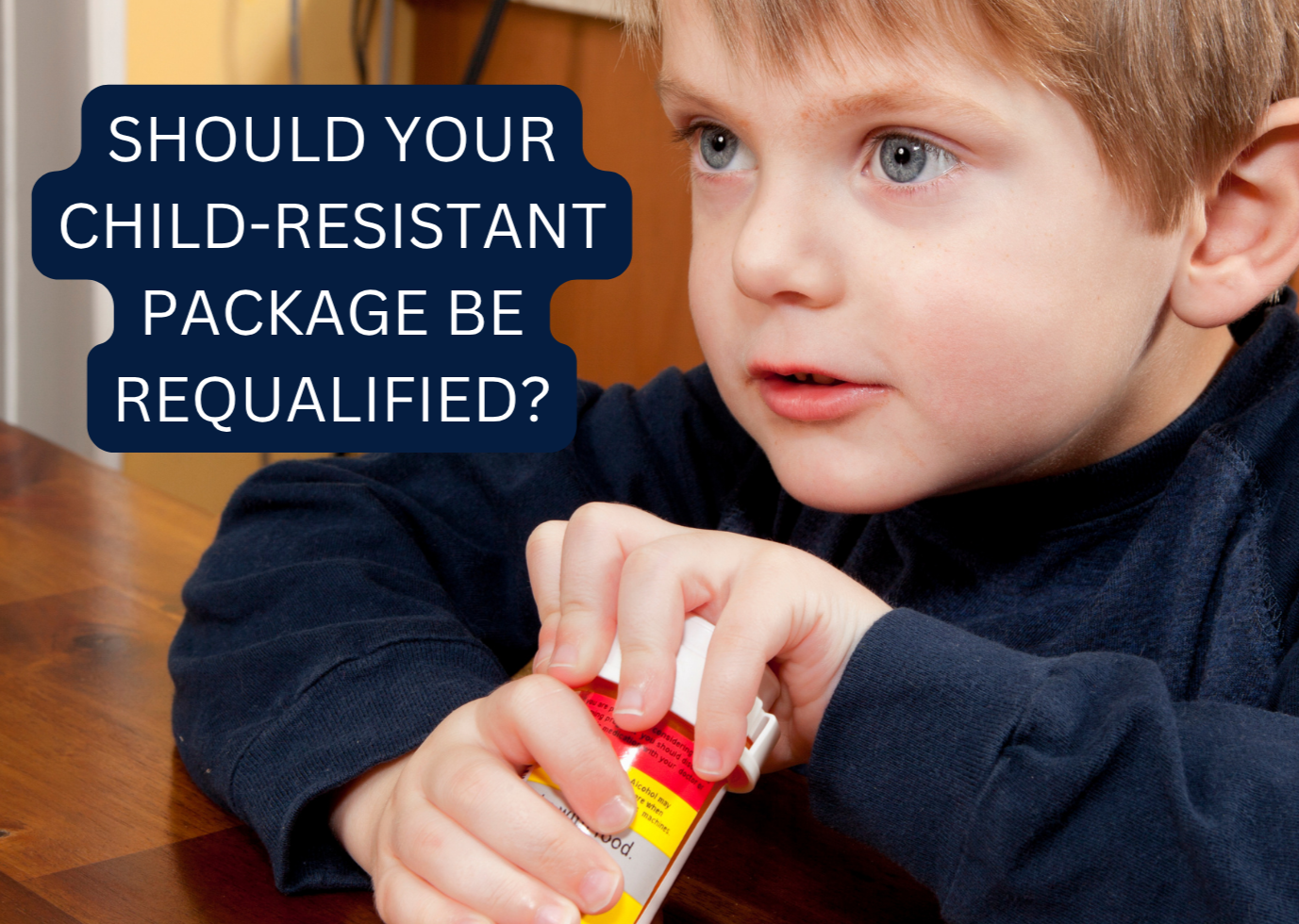
- Child Test: Children are given a set time to attempt to open the package, first unaided, then with a demonstration.
- Adult Test: Adults must successfully open and properly reclose the package within a defined time frame.
To pass, packaging must meet strict success/failure thresholds for both groups, demonstrating that it effectively balances safety and usability.
A Lasting Impact
The implementation of the PPPA and its associated testing standards has had a profound impact. Since its enactment, accidental poisoning deaths among young children have dropped dramatically.
What makes 16 CFR 1700.20 particularly notable is its enduring relevance. The methodology, grounded in human factors, behavioral science, and statistical rigor, remains a benchmark for safety testing worldwide.
Think about this...
The development of the PPPA and its testing protocols is a powerful example of how regulation, science, and design can work together to solve real-world problems. It reminds us that effective safety solutions are rarely accidental, they are carefully engineered, tested, and refined with the end user in mind.
For professionals in packaging, regulatory affairs, or product development, understanding this history is more than academic, it is essential to continue the mission of protecting consumers while maintaining usability and trust.
If you have any questions regarding child-resistant packaging and how to meet child-resistant package regulations - call the global leader - Bird Dog Marketing Group LLC at 717-615-9022 or email sales@birddogmarketinggroup.com.
Bird Dog Marketing Group is an international industry leader in Child Resistant (CR) and Senior Adult Use Effectiveness (SAUE) protocol testing. For over 55 years, we have been providing comprehensive research and testing services and have a record of success in safety and child-resistant package testing. We have tested and evaluated thousands of different package types, including unit dose packages, pouches, bottles, and containers with a variety of closures, aerosol cans, pump dispensers and more.
Our ISO 17025 accredited team provides an assurance of quality, accuracy, technical competence, impartiality, and consistent, valid results.