Holiday Time Safety - Are You Ready?

Mark Perkins • November 20, 2025

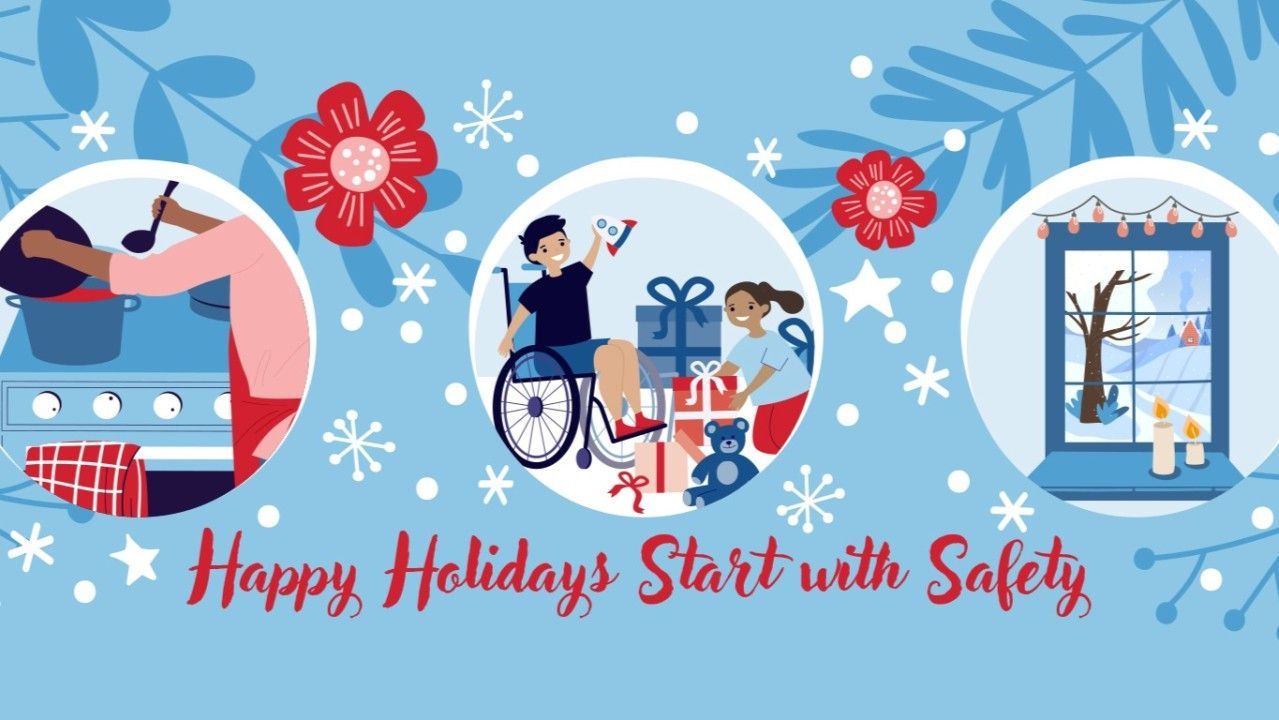
The Holidays Are Coming Let Us Celebrate Safely!

As we head into the holiday season, many of us are excited for the return of family gatherings, festive meals, and time spent with loved ones. Homes will soon be filled with family and friends — including curious little ones eager to explore!


But with small children around, it is critical to remember one important safety step:


Keep all medications, supplements, and hazardous household products stored securely and out of reach.


Every year, accidental poisonings spike during the holidays because visitors bring medicines in purses, coat pockets, and travel bags that are easily accessible to children.


Remember, a moment of distraction can lead to a serious emergency.


Quick reminders for hosting safety:


  • Store all medications high up and out of sight before guests arrive.


  • Offer a designated secure area for visitors to keep personal items.


  • Use child-resistant packaging whenever possible.


  • Share safety reminders with family members ahead of gatherings.


If your organization is working on child-resistant packaging solutions, now is the perfect time to ensure your products help keep families safe.


Contact Bird Dog Marketing Group for support with any child-resistant packaging projects.


Phone: 717-615-9022


Email: sales@birddogmarketinggroup.com


Website: www.birddogmarketinggroup.com


Our team specializes in safe, compliant, and innovative packaging solutions that protect both brands and the families who rely on them.


Let us celebrate the season with joy, connection, and safety top of mind.


Wishing everyone a wonderful and secure holiday ahead!

By Mark Perkins August 20, 2026
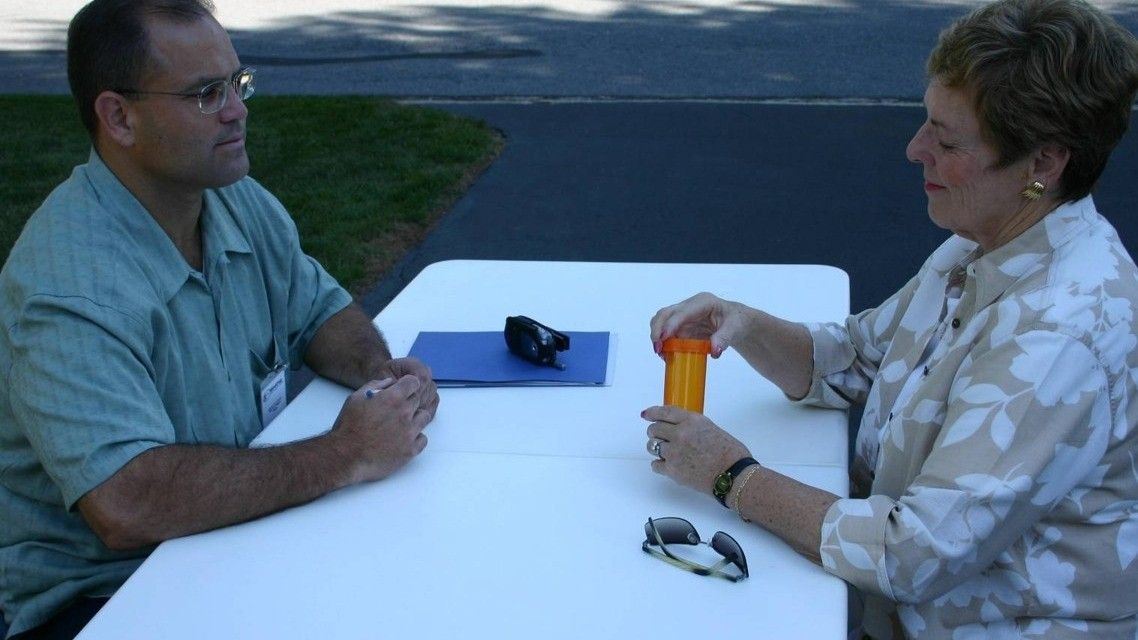
The purpose of the senior adult use effectiveness (SAUE) test is not only to determine whether an adult can close the package—it is to determine whether or not the adult has resecured it well enough that it is once again child-resistant. This distinction is why 16 CFR § 1700.20(d)(2) requires children to be part of the adult-resecuring test when there is no objective way to tell whether a package has been properly secured. Here's the logic behind the regulation: Adults answer: Can a typical adult open and close the package? Children answer: After the adult closed it, is it actually child-resistant again? Many child-resistant closures can look fully closed even when they are not. For example: A push-and-turn cap may not be screwed down far enough for the locking lugs to engage. A squeeze-and-turn cap may appear closed but not have the child-resistant mechanisms engaged. Some flexible packages or blister packages can appear resealed but still provide easy access. In those situations, a visual inspection or a torque measurement cannot reliably determine whether the package has been returned to a child-resistant condition. The regulation therefore treats the child as the functional "test instrument." If children can now open the package more often than expected, the resecuring by adults was not effective. The regulation specifically states that: Adults first open and resecure the package. The adults are not allowed to touch the package again. The apparently resecured packages are then given to children without any further adjustment. If children open more than 20% of those apparently resecured packages, those additional openings are counted as adult resecuring failures in the adult-use effectiveness calculation. Why not just test adults? Because adults are generally poor judges of whether they have fully engaged a child-resistant mechanism, a n adult may believe they closed the package correctly. Still, under the Poison Prevention Packaging Act, the only outcome that matters is whether a young child is prevented from accessing the contents. If the test relied only on adults, a package could pass even though many consumers were unknowingly leaving it in a condition that children could easily open. The child verification step measures the package's real-world protective performance , not just the user's perception. This approach reflects the primary purpose of the PPPA: protecting children from accidental poisoning while still allowing adults to use the package. The adult-resecuring test bridges those two objectives by verifying that a package remains child-resistant after normal adult use. If you have any questions regarding child-resistant packaging and how to meet child-resistant package regulations - call the global leader - Bird Dog Marketing Group LLC at 717-615-9022 or email sales@birddogmarketinggroup.com . Bird Dog Marketing Group is an international industry leader in Child Resistant (CR) and Senior Adult Use Effectiveness (SAUE) protocol testing. For over 55 years, we have been providing comprehensive research and testing services and have a record of success in safety and child-resistant package testing. We have tested and evaluated thousands of different package types, including unit dose-packages, pouches, bottles, and containers with a variety of closures, aerosol cans, pump dispensers and more. Our ISO 17025 accredited team provides an assurance of quality, accuracy, technical competence, impartiality, and consistent, valid results.

By Mark Perkins July 31, 2026
Despite decades of progress in product safety, accidental pediatric poisonings remain a significant public health concern. Young children, particularly those under five years of age, continue to experience unintentional exposures to pharmaceuticals, household chemicals, agricultural products, cannabis products, and other hazardous consumer goods. While education and proper storage remain important preventive measures, engineering controls continue to provide one of the most reliable layers of protection. Among these controls, child-resistant (CR) packaging has proven to be one of the most successful passive safety interventions ever implemented. Unlike behavioral controls that rely on consistent human actions, child-resistant packaging functions as an engineered barrier. Properly designed closures and package systems significantly reduce the probability that a young child can access hazardous contents during the critical time following product discovery. The objective is not to create a "child-proof" package—no such package exists—but rather to delay or prevent access long enough for adult intervention. This philosophy forms the basis of the Poison Prevention Packaging Act (PPPA) and the regulations contained in 16 CFR Part 1700 , which require many hazardous household substances and pharmaceuticals to be marketed in child-resistant packaging. Similar performance-based standards have been adopted internationally through ISO 8317 (reclosable packages) and EN 862 (non-reclosable packages), creating globally recognized benchmarks for child-resistant and senior-friendly package performance. The effectiveness of child-resistant packaging is grounded in human factors engineering rather than simply increasing package strength. Successful CR systems are designed to require combinations of cognitive understanding, hand strength, dexterity, coordination, and sequential actions that exceed the capabilities of most children under five years of age while remaining accessible to adults, including older adults. Common design features include: Simultaneous push-and-turn mechanisms Squeeze-and-turn closures Alignment or multi-step opening systems Hidden release mechanisms Sequential opening actions Blister systems requiring specific force and manipulation Flexible pouch systems incorporating certified CR zippers or locking mechanisms Each design is evaluated using standardized protocol testing involving both children and adults. Certification is based on statistically validated human performance—not theoretical design assumptions. Testing measures the percentage of children who are unable to gain access within prescribed time intervals while simultaneously confirming that adults, including senior users, can successfully open and properly resecure the package. As product categories continue to evolve, maintaining effective child-resistant performance has become increasingly complex. Today's marketplace includes products with higher concentrations of active ingredients, novel dosage forms, and packaging formats that did not exist when many regulations were originally developed. Examples include: High-potency prescriptions pharmaceuticals Over-the-counter medications Cannabis flower, concentrates, edibles, beverages, and tinctures Nicotine pouches and vaping products Laundry detergent pods and concentrated cleaning formulations Agricultural pesticides and herbicides Industrial and commercial chemicals Automotive fluids Essential oils and concentrated botanical extracts Vitamins and dietary supplements containing potentially toxic levels of iron or other ingredients The rapid growth of cannabis products illustrates why packaging engineers must continually adapt CR technologies. Edibles frequently resemble traditional confectionery products in appearance, texture, aroma, and flavor, increasing the likelihood of accidental ingestion by children. In these cases, effective child-resistant packaging becomes a critical component of the overall product safety strategy alongside labeling, dosing controls, and consumer education. From a manufacturing perspective, implementing child-resistant packaging involves far more than selecting a certified closure. Overall package performance depends upon numerous variables, including: Closure design and molding tolerances Container neck finish compatibility Application torque specifications Liner and induction seal performance Material compatibility throughout product shelf life Environmental conditioning Transportation and distribution impacts Reclosure integrity after repeated consumer use Ongoing quality verification and process validation Even relatively small deviations in manufacturing parameters can adversely affect child-resistant performance. Maintaining compliance therefore requires robust quality systems, statistical process control, closure torque verification, packaging validation, and periodic performance monitoring throughout commercial production. The continued expansion of sustainable packaging presents another engineering challenge. Manufacturers are increasingly transitioning to lightweight materials, post-consumer recycled (PCR) resins, bio-based polymers, and reduced-plastic designs. While these initiatives support environmental goals, every material or structural modification has the potential to alter child-resistant performance and should be evaluated through appropriate validation testing before commercialization. For manufacturers, child-resistant packaging should never be viewed solely as a regulatory obligation. It represents an essential risk mitigation strategy that protects consumers, reduces liability, supports regulatory compliance, and reinforces confidence in product quality and brand integrity. The most effective child-resistant package is one that consistently performs under real-world conditions, not simply one that passes qualification testing. Achieving that level of performance requires collaboration among packaging engineers, product designers, regulatory specialists, quality professionals, closure manufacturers, and testing laboratories throughout the product lifecycle. As new products enter the market and consumer expectations continue to evolve, innovation in child-resistant packaging must remain focused on its primary objective: preventing children from accessing hazardous products before an accidental poisoning can occur. Engineering safer packaging is not simply about meeting a specification; it is about designing systems that protect the most vulnerable consumers. If you have any questions regarding child-resistant packaging and how to meet child-resistant package regulations - call the global leader - Bird Dog Marketing Group LLC at 717-615-9022 or email sales@birddogmarketinggroup.com. Bird Dog Marketing Group is an international industry leader in Child Resistant (CR) and Senior Adult Use Effectiveness (SAUE) protocol testing. For over 57 years, we have been providing comprehensive research and testing services and have a record of success in safety and child-resistant package testing. We have tested and evaluated thousands of different package types, including unit dose packages, pouches, bottles, and containers with a variety of closures, aerosol cans, pump dispensers and more. Our ISO 17025 accredited team provides an assurance of quality, accuracy, technical competence, impartiality, and consistent, valid results.
By Mark Perkins June 15, 2026
A company name should serve as a true reflection of the company's core values. The video below shares why "Bird Dog" was the perfect name for our brand.
By Mark Perkins May 27, 2026
In the world of child-resistant (CR) packaging, many companies rely heavily on the fact that 16 CFR Part 1700 does not specify a mandatory timeline for requalification testing once a package design has successfully passed certification. Technically, if there are no changes to the package, closure, resin, tooling, or manufacturing process, there is no explicit federal requirement to retest. But should that really be the end of the conversation? The answer, from both a quality and risk-management perspective, is NO! The regulations establish the baseline for compliance, but they do not eliminate the responsibility to ensure that child-resistant functionality continues to perform as intended throughout the lifecycle of the package. U.S. Consumer Product Safety Commission protocols focus on package effectiveness, adult usability, and the ability of children to access hazardous contents. What is often overlooked is that packaging systems age - even when the design remains unchanged. Environmental conditions continuously evolve: Resin characteristics can drift over time. Torque consistency may vary between production campaigns. Liner compression and closure memory can change during long-term storage. Distribution environments expose packages to heat, humidity, vibration, and stress. Tool wear and dimensional variation can slowly impact performance. Most importantly, children themselves are changing. Today's children are exposed to technology, interactive learning systems, and advanced motor-skill development earlier than ever before. Structured educational programs in daycares and preschools have significantly increased problem-solving ability and hand coordination at younger ages. A closure design that was highly effective ten years ago may not present the same level of difficulty to modern children today. This is not speculation - it is a realistic human factors consideration. The intent of child-resistant packaging is not merely to pass a historical protocol once. The intent is ongoing protection. That is why many leading companies are adopting internal requalification strategies even in the absence of a regulatory mandate. A science-based approach to periodic verification demonstrates due diligence and strengthens both consumer safety and regulatory defensibility. A practical industry approach may include: Full requalification every 3-5 years for unchanged packaging systems Earlier testing if there are: material supplier changes, tooling refurbishment, manufacturing site transfers, torque specification shifts, complaint trends, or market incidents Annual engineering assessments of: closure torque retention, dimensional stability, environmental conditioning, wear, and lifecycle performance This aligns with broader durability expectations referenced in packaging regulations requiring CR systems to continue functioning throughout the "reasonably expected lifetime" of the package. Requalification should not be viewed as an unnecessary cost. It should be viewed as proactive risk management. Companies that periodically challenge their CR packaging systems are not simply checking a compliance box - they are demonstrating commitment to consumer safety, product stewardship, and continuous quality assurance. As packaging professionals, we should ask ourselves one important question: Are we maintaining compliance...or maintaining protection? If you have any questions regarding child-resistant packaging and how to meet child-resistant regulations - call the global leader - Bird Dog Marketing Group LLC at 717-615-9022 or email sales@birddogmarketinggroup.com. Bird Dog Marketing Group is an international industry leader in Child Resistant (CR) and Senior Adult Use Effectiveness (SAUE) protocol testing. For over 55 years, we have been providing comprehensive research and testing services and have a record of success in safety and child-resistant package testing. We have tested and evaluated thousands of different package types, including unit dose packages, pouches, bottles, and containers with a variety of closures, aerosol cans, pump dispensers and more. Our ISO 17025 accredited team provides an assurance of quality, accuracy, technical competence, impartiality, and consistent, valid results.

By Mark Perkins April 24, 2026
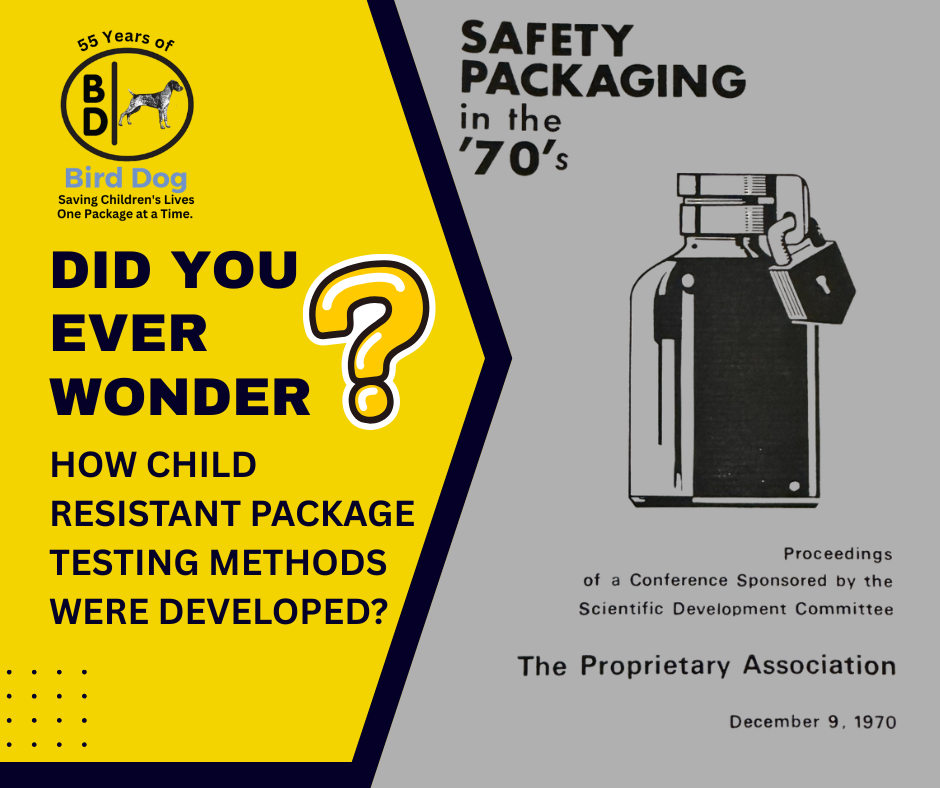
Bird Dog Marketing Group's founder, Gene Miller, was there at the beginning and we still have the documents as part of our history. We always get asked why certain ages for the child and adult tests. We also get asked why more women than men for the adult test. This was well thought out! Understanding the Origins of the PPPA and the Science Behind 16 CFR 1700.20 Testing In today's regulatory landscape, child safety packaging is something we often take for granted, but its development was driven by urgent public health needs and careful scientific study. The Birth of the Poison Prevention Packaging Act (PPPA) The Poison Prevention Packaging Act (PPPA), enacted in 1970, emerged in response to a sharp rise in accidental poisonings among young children in the United States. At the time, common household substances, ranging from medications to cleaning products, were easily accessible, and ingestion incidents were alarmingly frequent. Lawmakers, healthcare professionals, and safety advocates recognized that education alone was not enough. A passive, engineering-based solution was needed, one that would reduce risk without relying solely on behavior. The result was a mandate for "special packaging," designed to be significantly difficult for children under five years old to open, yet not difficult for average adults to use properly. Defining "Child-Resistant": The Role of 16 CFR 1700.20 To implement the PPPA effectively, regulators needed a standardized way to evaluate packaging performance. This led to the development of the testing protocol outlined in 16 CFR 1700.20. Rather than relying on theoretical design standards, the regulation established a performance-based testing method. This means packaging is judged based on how real users, children and adults, interact with it under controlled conditions. How the Testing Method Was Determined The methodology in 16 CFR 1700.20 was built on several key principles: Realistic Simulation of Use Testing needed to reflect actual human behavior. Researchers studied how children explore objects and how adults open packaging in everyday scenarios. Statistical Reliability Large sample sizes and repeatable protocols were introduced to ensure results were statistically meaningful and reproducible. Balanced Safety and Accessibility The goal was not to make packaging impossible to open, but to create a measurable delay or barrier for children while maintaining usability for adults. Why Ages 42-52 Months for Children? The selected child test group, ages 42 to 51 months (approximately 3.5 to 4.25 years old), was not arbitrary. This age range represents a critical developmental window: Children have sufficient motor skills and curiosity to attempt to open containers. They lack the cognitive reasoning and strength of older children. Data showed this group was at particularly considerable risk for accidental poisoning incidents. By testing children in this range, regulators ensured that packaging would be robust against the most capable segment of the at-risk population. Adult Test Panel: Ages 50-70 Equally important was ensuring that adults could still access the contents when needed. The adult test group was defined as individuals aged 50 to 70 years old, with at least 70% being female. This demographic was chosen based on several considerations: Older adults may experience reduced grip strength, dexterity, or vision. Women were historically more likely to be primary caregivers and frequent users of household products and medications. Designing for this group ensures accessibility for a broad population, including those with mild physical limitations. The Testing Process in Practice The protocol involves sequential testing: Child Test: Children are given a set time to attempt to open the package, first unaided, then with a demonstration. Adult Test: Adults must successfully open and properly reclose the package within a defined time frame. To pass, packaging must meet strict success/failure thresholds for both groups, demonstrating that it effectively balances safety and usability. A Lasting Impact The implementation of the PPPA and its associated testing standards has had a profound impact. Since its enactment, accidental poisoning deaths among young children have dropped dramatically. What makes 16 CFR 1700.20 particularly notable is its enduring relevance. The methodology, grounded in human factors, behavioral science, and statistical rigor, remains a benchmark for safety testing worldwide. Think about this... The development of the PPPA and its testing protocols is a powerful example of how regulation, science, and design can work together to solve real-world problems. It reminds us that effective safety solutions are rarely accidental, they are carefully engineered, tested, and refined with the end user in mind. For professionals in packaging, regulatory affairs, or product development, understanding this history is more than academic, it is essential to continue the mission of protecting consumers while maintaining usability and trust. If you have any questions regarding child-resistant packaging and how to meet child-resistant package regulations - call the global leader - Bird Dog Marketing Group LLC at 717-615-9022 or email sales@birddogmarketinggroup.com. Bird Dog Marketing Group is an international industry leader in Child Resistant (CR) and Senior Adult Use Effectiveness (SAUE) protocol testing. For over 55 years, we have been providing comprehensive research and testing services and have a record of success in safety and child-resistant package testing. We have tested and evaluated thousands of different package types, including unit dose packages, pouches, bottles, and containers with a variety of closures, aerosol cans, pump dispensers and more. Our ISO 17025 accredited team provides an assurance of quality, accuracy, technical competence, impartiality, and consistent, valid results.
By Mark Perkins April 20, 2026
Are You Ready for the CPSC eFiling Deadline Beginning July 8, 2026?
By Mark Perkins March 20, 2026
Have we proven it stays child-resistant for the entire life of the package? Child-resistant (CR) packaging is not just a regulatory checkbox—it is a critical safety system. Whether for pharmaceuticals, animal health, agriculture, cannabis products, household chemicals, or nicotine products, CR packaging exists for one reason: to protect children from accidental ingestion or exposure. Yet one of the most common and costly mistakes companies make is assuming that once a package passes child-resistance testing, the job is done. It is not. A package must remain child-resistant throughout its entire intended life cycle —not just on day one. Certification Is the Beginning—Not the End. In the United States, child-resistant packaging is governed by the Poison Prevention Packaging Act (PPPA) and enforced by the U.S. Consumer Product Safety Commission (CPSC). Testing protocols such as 16 CFR §1700.20 evaluate whether children can access the contents within a defined test period. These tests are rigorous. But here is the key issue: Most certification testing evaluates new packages - not packages after repeated consumer use. In real-world conditions, packaging is: Opened and closed repeatedly Dropped Exposed to temperature changes Subjected to torque variation Handled by consumers with different strength profiles If the closure system degrades, loosens, cracks, or loses alignment, child resistance can be compromised—even if the original design passed testing. Why Life-Cycle Performance Matters Child-resistant systems typically rely on: Push-and-turn mechanisms Squeeze-and-turn features Alignment arrows Locking tabs Blister tear strength All these features can degrade over time. Common failure modes include: Thread wear reducing required torque Plastic creep in snap features Tab fatigue or breakage Liner compression set Dimensional changes from environmental exposure If the required opening force or alignment precision decreases below tested thresholds, the package may no longer meet compliance requirements—exposing the brand to regulatory risk and liability. Two Critical Approaches to Life-Cycle Validation 1. Simulated Use Testing (Open/Close Cycling) This method replicates the expected number of consumer uses. For example: A 30-count medication bottle may be opened 30-60 times. A multi-dose cannabis container may be opened dozens of times over weeks. Testing includes: Cycling the closure the full expected number of uses before CR testing. Measuring removal torque before, during, and after cycling Inspecting mechanical engagement features Re-testing child resistance after conditioning This approach directly validates real-world performance. 2. Wear & Measurement Studies This approach evaluates dimensional and mechanical degradation over time. Key metrics include: Thread pitch and profile integrity Cap skirt deformation Engagement depth Tab retention force Material creep under stress Torque decay curves Wear studies are particularly important when: Using new resin formulations Lightweighting components Changing mold tooling Switching manufacturing sites Even minor dimensional shifts can significantly affect child-resistant performance. The Hidden Risk: Manufacturing Variability Many compliance failures occur not because of design intent - but because of production drift. Tool wear, resin lot variation, or process changes can reduce performance margins. Without life-cycle validation protocols in place, these shifts may go undetected until a complaint or audit occurs. Proactive companies build: Periodic requalification testing Statistical torque monitoring Accelerated aging studies Environmental conditioning protocols into their quality systems. Regulatory and Legal Exposure If a package fails in the field after repeated use, regulatory bodies may determine it was never compliant under foreseeable use conditions. That can mean: Product recalls Civil penalties Litigation exposure Brand damage Child-resistant performance is not just about passing a lab test—it is about defending the package's safety under real consumer behavior. Best Practices for Maintaining Compliance Define expected number of consumer uses Conduct open/close cycle validation Measure torque decay over time Perform dimensional wear analysis Include environmental conditioning Re-test after design or material changes Document protocols thoroughly Most importantly: Treat child-resistant performance as a life-cycle requirement , not a one-time certification event. Final Thought In packaging development, it is easy to focus on innovation, sustainability, cost reduction, and speed to market. But when it comes to child-resistant systems, durability equals safety. The true measure of compliance is not whether a package passes on day one - it is whether it protects children on day thirty or longer. And that requires intentional life-cycle validation. If your organization is developing or modifying CR packaging, now is the time to ask: Have we proven it stays child-resistant for the entire life of the package?  If you have any questions regarding child-resistant packaging and how to meet child-resistant package regulations - call the global leader - Bird Dog Marketing Group LLC at 717-615-9022 or email sales@birddogmarketinggroup.com. Bird Dog Marketing Group is an international industry leader in Child Resistant (CR) and Senior Adult Use Effectiveness (SAUE) protocol testing. For over 55 years, we have been providing comprehensive research and testing services and have a record of success in safety and child-resistant package testing. We have tested and evaluated thousands of different package types, including unit dose packages, pouches, bottles, and containers with a variety of closures, aerosol cans, pump dispensers and more. Our team provides an assurance of quality, accuracy, and hyper-focused attention to detail for all package testing.
By Mark Perkins February 18, 2026
In today’s fast-moving consumer goods environment, speed to market often takes priority over process discipline. When it comes to Child-Resistant (CR) packaging , especially for products that enter homes with young children—cutting corners on Standard Operating Procedures (SOPs), is not just risky. It can be catastrophic. The Hidden Risk Behind “Good Enough” Packaging Child-resistant packaging is not simply a design feature. It is a safety system —one that must be consistently executed, verified, documented, and audited. Products commonly requiring CR packaging include: Pharmaceuticals (prescription & OTC) Cannabis products Cleaning agents Chemicals Nicotine products Nutritional supplements Cosmetics with active ingredients Animal Health Agricultural Lawn and Garden When SOPs are weak, outdated, inconsistently followed, or nonexistent, risk multiplies across every stage of the supply chain. Where Companies Go Wrong 1. Inconsistent Testing & Certification Many organizations assume supplier certification is sufficient. It is not. Standards such as: U.S. Consumer Product Safety Commission (CPSC) requirements ASTM International child-resistance protocols International Organization for Standardization (ISO) quality systems require formal, documented compliance—not assumptions. Without clear SOPs for: Qualification testing Lot traceability Change management Re-validation after tooling or material changes you may be shipping non-compliant packaging without realizing it. 2. Poor Change Control A resin supplier substitutes material. A mold cavity is adjusted. A torque setting is altered on the line. If your SOPs do not mandate revalidation of child-resistance performance after changes, you may unknowingly compromise functionality. CR packaging can pass lab testing and still fail in real-world production if process controls drift. 3. Lack of Production Monitoring Child-resistant closures are highly sensitive to: Application torque Liner placement Thread engagement Dimensional tolerances Without documented in-process checks and escalation protocols, minor deviations can result in packaging that appears compliant—but opens easily in a child’s hands. 4. Documentation Gaps In the event of an incident, regulators and attorneys will ask: Where is your validation report? Where is your batch record? Where is your requalification documentation? Who signed off? When was it reviewed? If your SOPs are unclear—or worse, nonexistent—your exposure increases exponentially. The Regulatory Exposure In the United States, the U.S. Consumer Product Safety Commission enforces the Poison Prevention Packaging Act (PPPA). Non-compliance can trigger: Mandatory recalls Civil penalties Consent decrees Import detentions Criminal liability (in extreme negligence cases) Other global markets impose similar requirements. A single failure can halt multi-country distribution. The Financial Consequences Let’s break down the potential costs: Product Recall Reverse logistics Consumer notifications Retailer penalties Product destruction Replacement manufacturing Public relations crisis management Estimated cost range: $2M–$20M+ depending on scale. Civil Litigation If a child gains access to a hazardous product: Medical expenses Pain & suffering damages Punitive damages Class action exposure Multi-year legal defense costs Jury verdicts involving child injury routinely exceed $10M–$50M+ , particularly if documentation gaps demonstrate negligence. Brand Damage Trust erosion is immeasurable but devastating: Retailers drop your SKU Insurance premiums spike Investors pull back Regulatory scrutiny intensifies The Worst-Case Scenario: A Child Fatality No executive wants to imagine it—but this is the true risk. A single preventable child death linked to packaging failure can result in: National media coverage Criminal investigation Corporate officer liability Wrongful death litigation Permanent brand destruction Beyond legal and economic loss lies the moral reality: a preventable tragedy that will define your company’s legacy. So… Are You at Risk? Ask yourself: Do you have formal, documented SOPs specific to CR packaging? Are they version-controlled and audited? Do you revalidate after material or tooling changes? Is production torque monitored and recorded? Can you produce compliance documentation within 24 hours? If the answer to any of these is “no” or “I’m not sure,” you are exposed. What Strong Organizations Do Differently Leading companies: Integrate CR packaging validation into Quality Management Systems Require requalification after any process or material change Maintain supplier agreements tied to compliance standards Conduct periodic child-resistance performance testing Train operations teams specifically on CR risk They treat child-resistant packaging not as a packaging feature—but as a regulated safety control system . Final Thought Standard Operating Procedures are not bureaucracy. They are legal armor. They are operational discipline. They are child safety safeguards. And in this category, failure is not measured in returned products. It is measured in lawsuits, multimillion-dollar recalls, regulatory sanctions—and potentially the life of a child. Are you confident your SOPs would stand up in court? If not, now is the time to act. If you have any questions regarding child-resistant packaging and how to meet child-resistant package regulations - call the global leader - Bird Dog Marketing Group LLC. at 717-615-9022 or email sales@birddogmarketinggroup.com. Bird Dog Marketing Group is an international industry leader in Child Resistant (CR) and Senior Adult Use Effectiveness (SAUE) protocol testing. For over 55 years, we have been providing comprehensive research and testing services and have a record of success in safety and child-resistant package testing. We have tested and evaluated thousands of different package types, including unit dose packages, pouches, bottles, and containers with a variety of closures, aerosol cans, pump dispensers and more. Our team provides an assurance of quality, accuracy, and hyper-focused attention to detail for all package testing.
By Mark Perkins February 5, 2026
Bird Dog Marketing Group's Commitment to Sustainability: Small Changes, Meaningful Impact
By Mark Perkins February 2, 2026
Why the CPSIA Matters: Protecting Children and Preventing Poisonings in the United States