Why Child-Resistant Packaging Should Be Periodically Requalified - Even When Nothing Has Changed
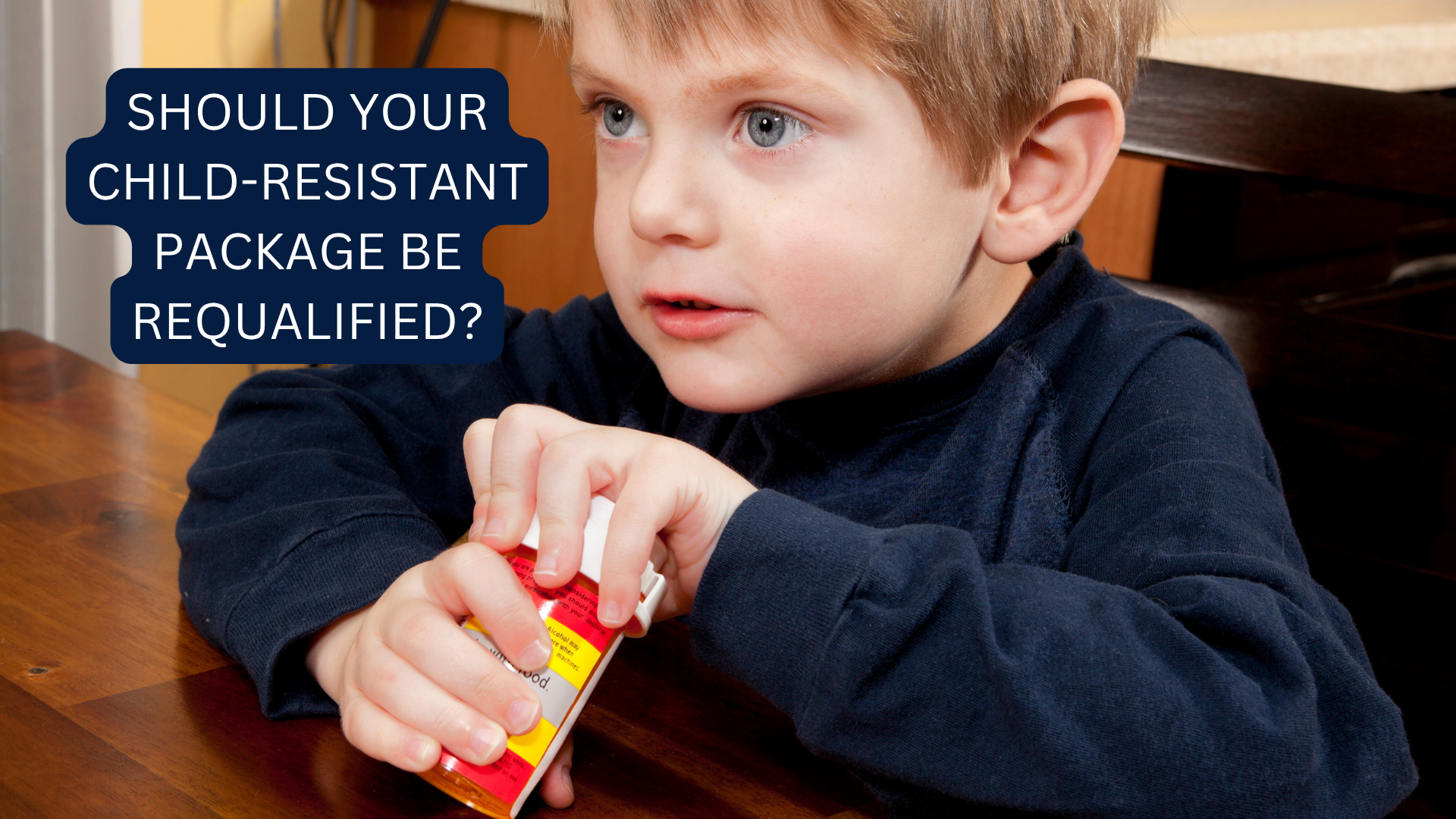
In the world of child-resistant (CR) packaging, many companies rely heavily on the fact that 16 CFR Part 1700 does not specify a mandatory timeline for requalification testing once a package design has successfully passed certification. Technically, if there are no changes to the package, closure, resin, tooling, or manufacturing process, there is no explicit federal requirement to retest.
But should that really be the end of the conversation?
The answer, from both a quality and risk-management perspective, is NO!
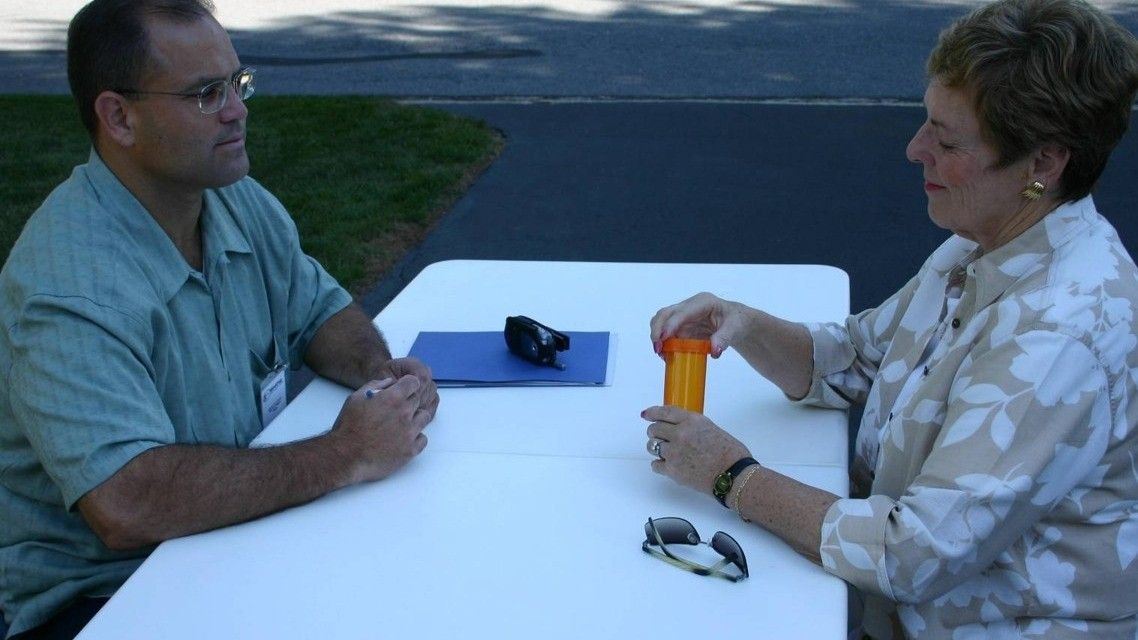
The regulations establish the baseline for compliance, but they do not eliminate the responsibility to ensure that child-resistant functionality continues to perform as intended throughout the lifecycle of the package. U.S. Consumer Product Safety Commission protocols focus on package effectiveness, adult usability, and the ability of children to access hazardous contents.
What is often overlooked is that packaging systems age - even when the design remains unchanged.
Environmental conditions continuously evolve:
- Resin characteristics can drift over time.
- Torque consistency may vary between production campaigns.
- Liner compression and closure memory can change during long-term storage.
- Distribution environments expose packages to heat, humidity, vibration, and stress.
- Tool wear and dimensional variation can slowly impact performance.
Most importantly, children themselves are changing.
Today's children are exposed to technology, interactive learning systems, and advanced motor-skill development earlier than ever before. Structured educational programs in daycares and preschools have significantly increased problem-solving ability and hand coordination at younger ages. A closure design that was highly effective ten years ago may not present the same level of difficulty to modern children today.
This is not speculation - it is a realistic human factors consideration.
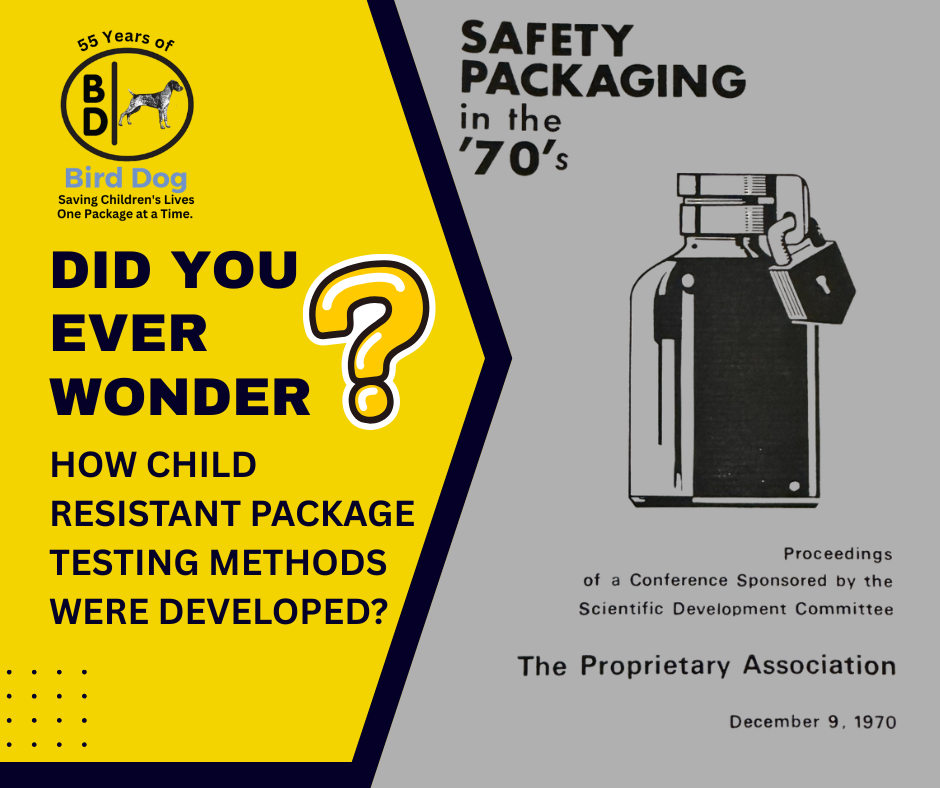
The intent of child-resistant packaging is not merely to pass a historical protocol once. The intent is ongoing protection.
That is why many leading companies are adopting internal requalification strategies even in the absence of a regulatory mandate. A science-based approach to periodic verification demonstrates due diligence and strengthens both consumer safety and regulatory defensibility.
A practical industry approach may include:
- Full requalification every 3-5 years for unchanged packaging systems
- Earlier testing if there are: material supplier changes, tooling refurbishment, manufacturing site transfers, torque specification shifts, complaint trends, or market incidents
- Annual engineering assessments of: closure torque retention, dimensional stability, environmental conditioning, wear, and lifecycle performance
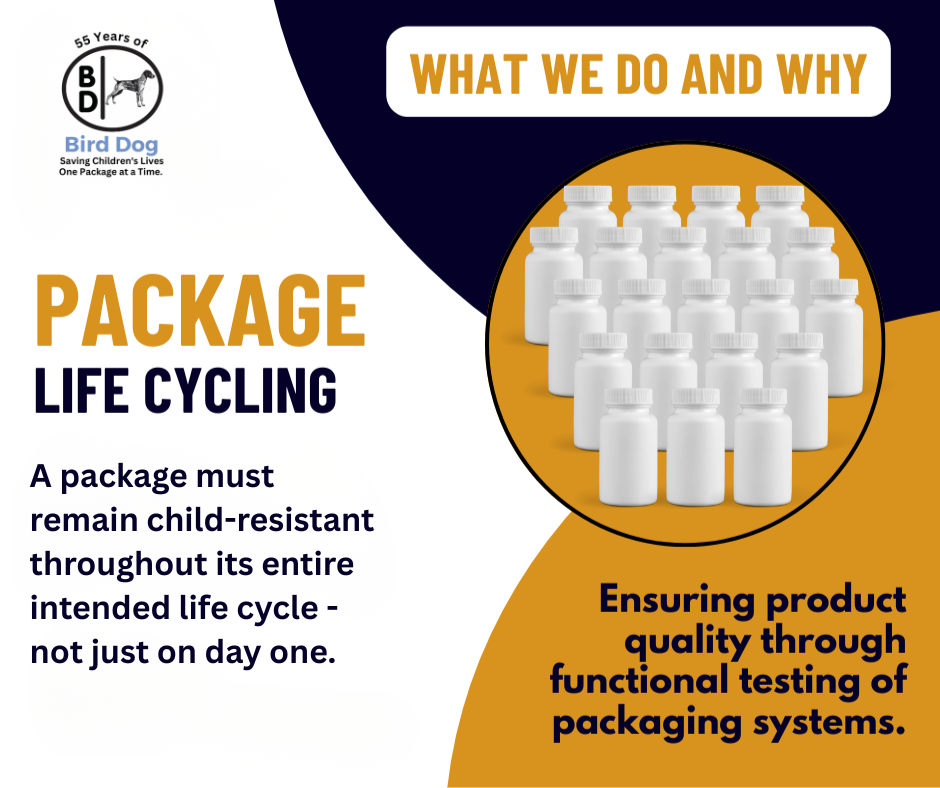
This aligns with broader durability expectations referenced in packaging regulations requiring CR systems to continue functioning throughout the "reasonably expected lifetime" of the package.
Requalification should not be viewed as an unnecessary cost.
It should be viewed as proactive risk management.
Companies that periodically challenge their CR packaging systems are not simply checking a compliance box - they are demonstrating commitment to consumer safety, product stewardship, and continuous quality assurance.
As packaging professionals, we should ask ourselves one important question:
Are we maintaining compliance...or maintaining protection?
If you have any questions regarding child-resistant packaging and how to meet child-resistant regulations - call the global leader - Bird Dog Marketing Group LLC at 717-615-9022 or email sales@birddogmarketinggroup.com.
Bird Dog Marketing Group is an international industry leader in Child Resistant (CR) and Senior Adult Use Effectiveness (SAUE) protocol testing. For over 55 years, we have been providing comprehensive research and testing services and have a record of success in safety and child-resistant package testing. We have tested and evaluated thousands of different package types, including unit dose packages, pouches, bottles, and containers with a variety of closures, aerosol cans, pump dispensers and more.
Our ISO 17025 accredited team provides an assurance of quality, accuracy, technical competence, impartiality, and consistent, valid results.