
Team Member Tuesday - Beth Mack

Beth Mack • January 18, 2021

Team Member Tuesday with Beth Mack!

Today we are celebrating our Director of Marketing, Beth Mack. Thank you for communicating the important work we are doing to save children from accidental poisoning...you are making a difference. 

How long have you worked for BDMG?

Trick question. When my children were in elementary school, I worked part-time as a testing proctor for BDMG for about 4 years. I then moved on to a full-time position in marketing at a commercial construction company for 10 years. In November 2019, I was excited to join BDMG as Director of Marketing to expand the business and share the important work we do to save children from accidental poisoning.


Tell us a little bit about your family. 

I am blessed with two great kids and now a daughter-in-law! My son, Josh, is a computer engineer working for a defense contractor in Maryland. He and his wife, Hannah, were married this past September in a beautiful backyard ceremony. My daughter, Abby, graduated from Boston University in May of 2020 and is now a consumer insight analyst with SharkNinja in Boston. Although this year brought many unexpected challenges, we also experienced many blessings.


What are your favorite hobbies?

A few years ago, I moved to Main Street in Lititz, which has been voted one of the ‘coolest towns in America.’ It has been fun to invite family and friends to enjoy the town and the various events that make this town so special – looking forward to doing this again in the coming year! I’ve always considered the beach my ‘happy place’ so spending time in Ocean City, MD is a priority. As a member of the Lancaster Sunrise Rotary Club, I enjoy participating in the club's leadership and our various fundraising events that raise money for local non-profits and student scholarships.


What is your favorite quote?  

My father often told me, “Just do your best; that is all you can do.” This quote has served me well so far!


If you could travel anywhere in the world, where would you go?

There are so many places I haven’t been to, so the list is pretty long. I spent one week in London/Paris while my daughter was studying abroad. It would be nice to revisit and explore new areas, including southern France, Italy, and Ireland.


If you were to retire and work at Disney World, what would be your dream job?

This is actually something that my sisters and I discussed many years ago when we celebrated my 40th birthday with a trip to Disney World! No doubt, I would be a Pin Trader. When my children were very young, we enjoyed collecting pins throughout the various properties, and I have added to the collection over the years.


Do you have a favorite non-profit or organization that you like to volunteer for or support?

I support several organizations, but two of my favorites that I volunteer/support are Off The Streets, Lancaster, and Aaron’s Acres. Off The Streets provides security deposits and household furnishings for individuals who have an income but are experiencing homelessness. Volunteers completely run the organization, and the positive impact on these families is truly amazing. Aaron’s Acres provides children and young adults with disabilities the opportunity to learn, grow, and succeed through participation in summer camp programs. Both organizations have passionate leaders and volunteers who are making a difference every day.


What is the funniest situation you have run into while doing child-resistant adult package testing?

On the child side of child-resistant package testing, I would say kids can be incredibly wise and very funny! With the adult testing, I’m always amazed at how creative we need to be when asking men and women their age so that we don’t offend anyone.


Beth, thank you for sharing your story!  We appreciate your giving us a peek into your life and why you are such a special member of our team! 

By Mark Perkins November 20, 2025
The Holidays Are Coming — Let Us Celebrate Safely!
By Mark Perkins October 30, 2025
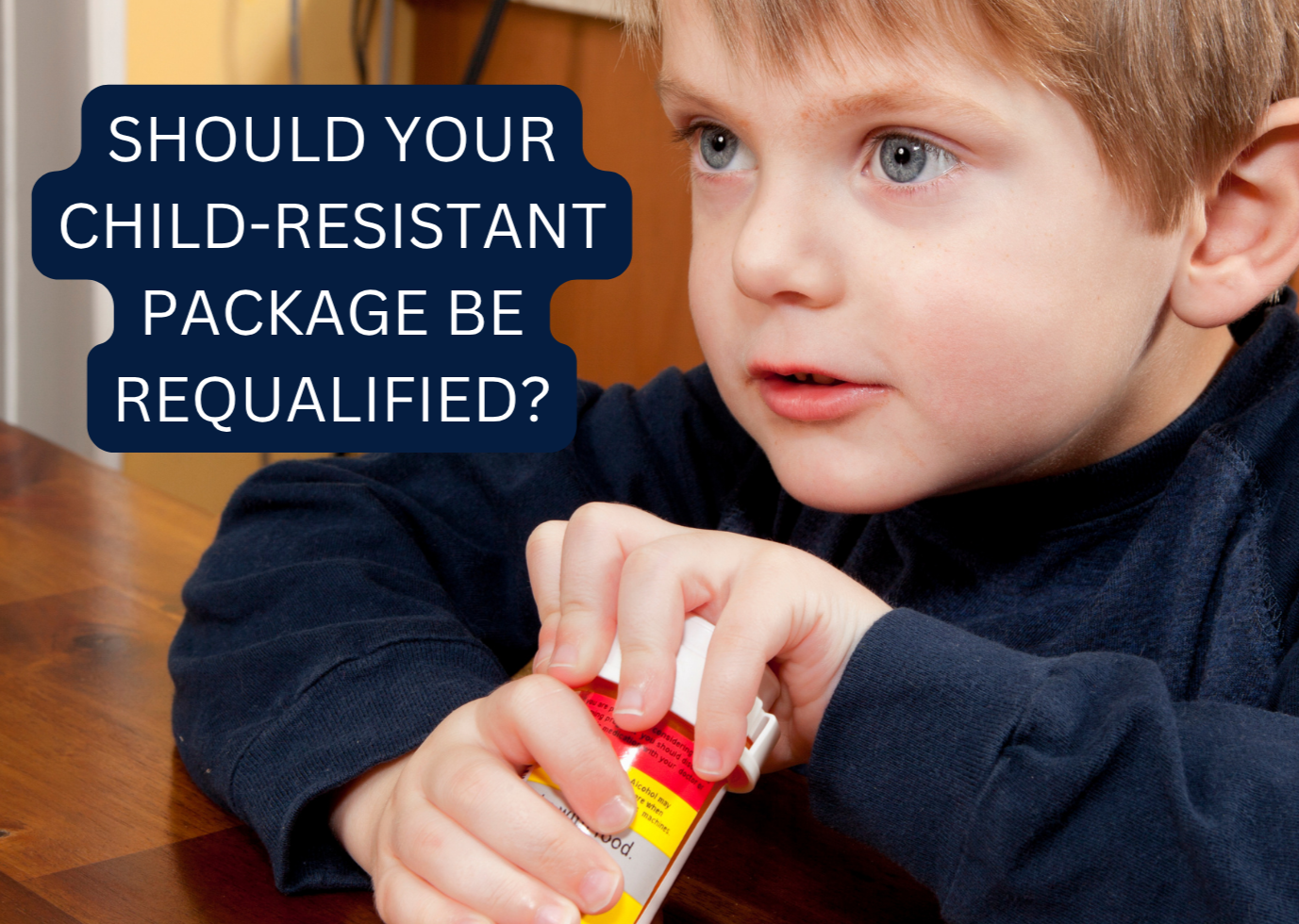
Every year, thousands of children are rushed to emergency rooms after accidentally ingesting household products or medications that were not properly secured. The incidents are tragic—and often preventable. That is why the Poison Prevention Packaging Act (PPPA) exists. Enacted in 1970 , the PPPA requires that many everyday substances—such as prescription drugs, over-the-counter medications, cleaning products, and certain chemicals—be packaged in child-resistant containers . These are designed to be difficult for young children to open, but accessible for adults. Why the PPPA Matters Before the PPPA, accidental poisonings were one of the leading causes of death among children under five years old in the United States. Since its implementation, the law has saved countless lives by dramatically reducing incidents of accidental ingestion. It is not just about compliance; it is about responsibility. Child-resistant packaging creates a crucial barrier between children's natural curiosity and potentially lethal substances. Even one oversight—one improperly packaged product—can have devastating consequences for a family. It is Not a Recommendation. It is Law! The PPPA is federal law enforced by the Consumer Product Safety Commission (CPSC) . Manufacturers, packagers, and distributors must comply with their requirements. Noncompliance can result in serious legal and financial penalties—not to mention the ethical cost of endangering public safety. Every organization involved in the manufacture or distribution of regulated products should treat PPPA compliance as non-negotiable. This includes ensuring that: All applicable products use approved child-resistant packaging. Packaging designs are tested and certified. Staff are trained in PPPA requirements. Documentation is maintained for audits or inspections. An SOP (Standard Operating Procedure) for your CR testing requirements are strongly recommended. Protecting Children Is Everyone's Duty Child safety should never be taken lightly. The PPPA stands as one of the most impactful public health laws in U.S. history, and it remains just as vital today as it was over fifty years ago. Whether you work in package manufacturing, pharmaceuticals, consumer healthcare, agriculture, chemical, cannabis, retail or any industry that uses special packaging—your role in preventing accidental poisonings matters. Compliance is not optional. It is the law , and more importantly, it is a commitment to protecting the most vulnerable among us. If you have any questions regarding child-resistant packaging and how to meet child-resistant package regulations - call Bird Dog Marketing Group LLC at 717-615-9022 or email sales@birddogmarketinggroup.com. Bird Dog Marketing Group is an international industry leader in Child Resistant (CR) and Senior Adult Use Effectiveness (SAUE) protocol testing. For over 55 years, we have been providing comprehensive research and testing services and have a record of success in safety and child-resistant package testing. We have tested and evaluated thousands of different package types, including unit dose packages, pouches, bottles, and containers with a variety of closures, aerosol cans, pump dispensers and more. Our team provides an assurance of accuracy and hyper-focused attention to detail for all package testing.
By Mark Perkins September 15, 2025
Our Commitment to Quality and Innovation
Hands outstretched with a globe hovering above.
By Mark Perkins April 28, 2025
Since 1969, Bird Dog Marketing Group has emerged as a global leader in child-resistant (CR) package testing.
Photo of computer laptop screen, tiny shopping cart holding medicine bottles.
By Mark Perkins March 13, 2025
As e-commerce continues to surge, the importance of child-resistant packaging has never been more critical.
Photograph of colorful question marks and words.
By Mark Perkins November 19, 2024
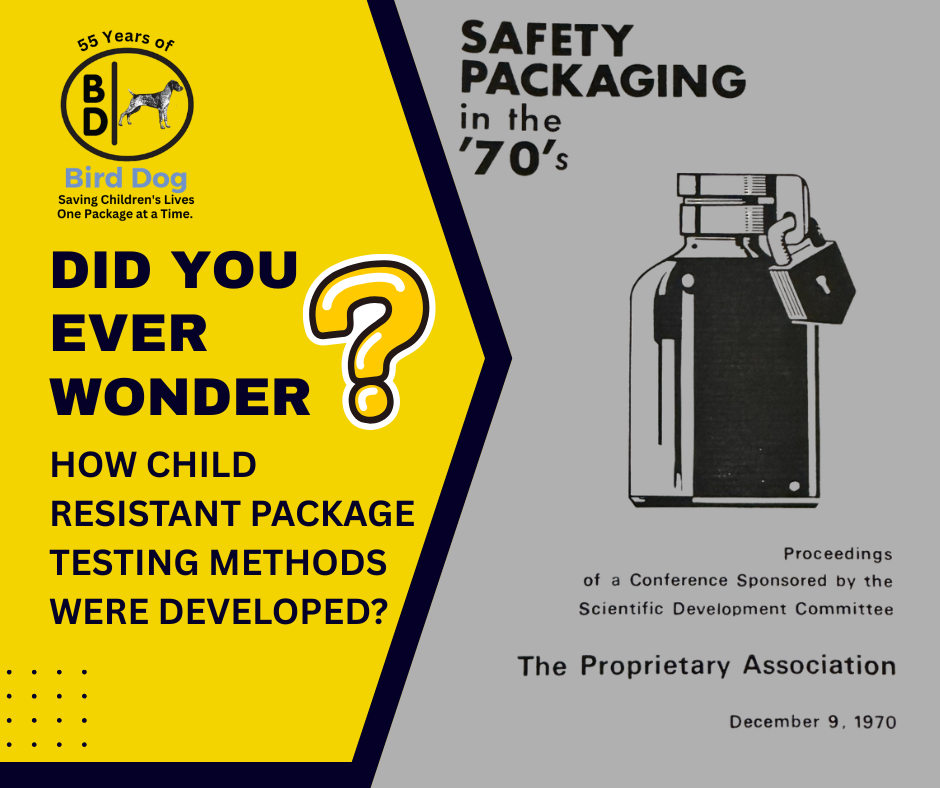
The Poison Prevention Packaging Act (PPPA), enacted in 1970, is one of the cornerstones of child safety regulations in the United States. Its primary goal is to prevent children from accessing hazardous household substances like medications, household chemicals, and other toxic products. As part of this initiative, the law requires certain products to be packaged in child-resistant containers. The question is: how did the government determine the specific age ranges of children who should be tested for these packaging requirements?
Young child sitting on the floor with open medicine containers.
By Mark Perkins November 4, 2024
The Poison Prevention Packaging Act: A Milestone in Child Safety
Photo of spray bottle for cleaning supplies and words reading Child-Resistant, Not Child-Proof.
By Mark Perkins October 17, 2024
Dispelling the Myth: Why There is No Such Thing as Child-Proof Packaging. In the realm of product safety, particularly concerning items like medications, household cleaners, and chemicals, the term "child-proof packaging" is commonly used. However, despite its widespread usage, the concept of truly child-proof packaging is a misnomer. We will delve into why there's no such thing as completely child-proof packaging and what measures can be taken to enhance child safety.
Young girl in a ballet outfit sitting on a windowsill looking outside.
By Mark Perkins October 17, 2024
Every year, thousands of children under the age of five face serious health risks due to unintentional poisonings. This article will review the statistics, explain how child-resistant packaging works, and detail how parents can help keep their children safe from accidental poisoning.
People sitting at an expo booth with banner sign behind them requesting help for package testing.
By Mark Perkins June 5, 2024
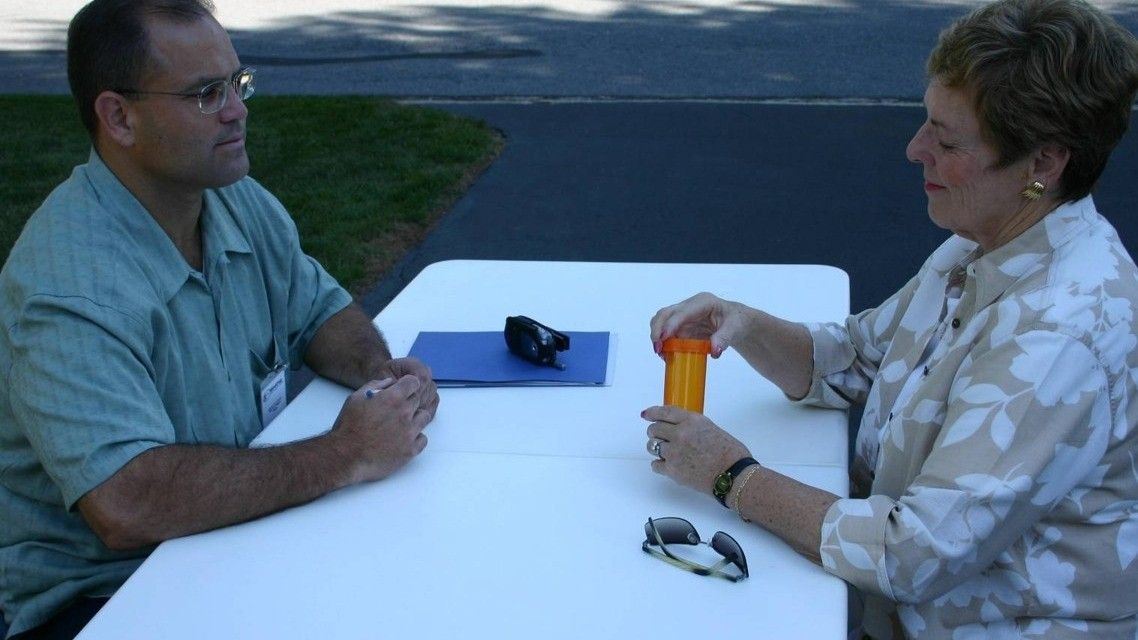
Our test proctors administering adult-use package testing are often asked, “Why are you only testing adults 50-70 years of age?” Here’s the story behind that decision. When the U.S. Congress passed the Poison Prevention Packaging Act of 1970 (PPPA), the Consumer Product Safety Commission (CPSC) required child-resistant packaging for specific drugs and household chemicals that could harm children. Package manufacturers developed and introduced new child-resistant packaging to comply with the requirements. Per the PPPA, the specialty packaging required certification that they were child-resistant. At the time, the adult-use effectiveness portion of the package test protocols included adult test subjects 18-45 years of age, a significant change from our current adult-use effectiveness subjects who are 50-70.